Random trips, mystery resets, hot transformers, short-lived electronics — when your power misbehaves, we record it in the act and fix the actual cause.
"Clean" power is an assumption most facilities never verify. In reality, voltage sags when big motors start, harmonics from electronic loads circulate through transformers and neutrals, transients ride in from the utility, and phases drift out of balance as a building's loads evolve over the years. Each of those quietly shortens equipment life — and occasionally announces itself as a breaker trip nobody can explain.
Power quality analysis replaces guessing with data. We instrument your system and record what your power actually does over days of normal operation, then translate the recordings into a clear diagnosis: what's normal, what's not, what's causing it, and what it will take to correct. It's the difference between replacing parts until the symptom moves and fixing the disease.
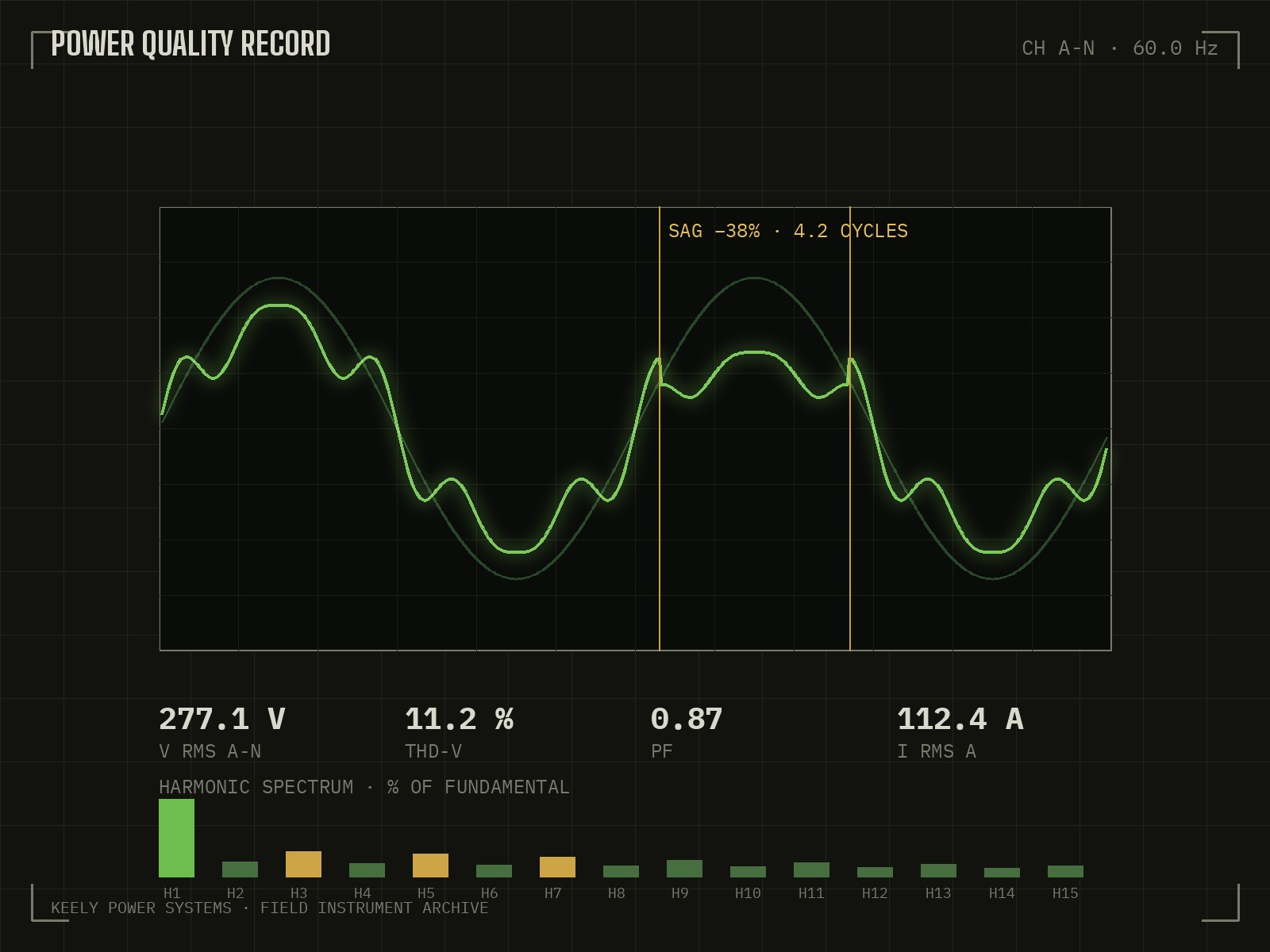
There's always a reason — inrush, harmonics heating the breaker, a sag dropping out contactors, or a real intermittent fault. A week of recording usually catches it red-handed.
Drives, controllers, and power supplies failing young often points to transients or chronic voltage problems. We identify the stressor so replacements stop being routine.
Harmonic-rich loads can overheat transformers and neutral conductors even when nothing is 'overloaded' on paper. Measurement shows whether you need derating, filtering, or rebalancing.
Adding a large machine, VFDs, or EV charging? A baseline study confirms your system's capacity and quality headroom before you commit — not after the nuisance trips start.
Breakers that trip with no apparent overload, equipment that resets or faults randomly, motors and transformers running hot, flickering lighting, capacitors failing early, and electronics with short lifespans. If a problem is intermittent and nobody can catch it in the act, power quality monitoring usually can.
We install recording instruments at your service entrance and problem circuits, typically for a week or more of normal operation. The recorders capture voltage sags, swells, transients, harmonics, and load profiles around the clock — including the 3 AM event nobody witnesses.
Modern electronic loads — VFDs, LED drivers, computers, UPS systems — draw current in pulses rather than smooth waves. The distortion they create heats transformers and neutrals, trips breakers, and interferes with sensitive equipment. Measurement tells you whether harmonics are within limits or quietly cooking your gear.
Monitoring answers exactly that. Voltage events arriving from the utility side look different in the data than problems created by your own loads — so you can go to your utility with evidence, or fix the in-house cause, instead of guessing.
You get a plain-language report: what we recorded, what's inside normal limits, what isn't, what's causing it, and what fixing it looks like — from tightening and balancing to filters or dedicated circuits. Recommended corrections are quoted flat-rate.
Start with a no-cost, no-obligation survey: we'll walk your electrical system, give you a written proposal for your testing program, and include the replacement cost of your electrical distribution — so you know exactly what's at stake.