In 2023, electrical equipment maintenance went from "good idea" to written standard. Here's what NFPA 70B now expects of your facility — and how to get there without drama.
For nearly fifty years, NFPA 70B was a "recommended practice" — good advice a facility could take or leave. The 2023 edition changed its character entirely: it is now the Standard for Electrical Equipment Maintenance, written in enforceable "shall" language. Maintenance of electrical equipment is no longer framed as a best practice. It's framed as a requirement.
The heart of the standard is the Electrical Maintenance Program (EMP) — a documented, ongoing program covering your electrical distribution equipment from the service entrance down. The standard spells out what the program must contain, who can perform the work (qualified persons only), and how results must be documented and retained.
Why it matters even if no inspector is at your door: NFPA standards define the recognized duty of care. Insurers reference them, OSHA's General Duty Clause leans on them, and after an electrical fire or injury, "we didn't maintain it" is no longer a defensible position when a national standard says you shall.
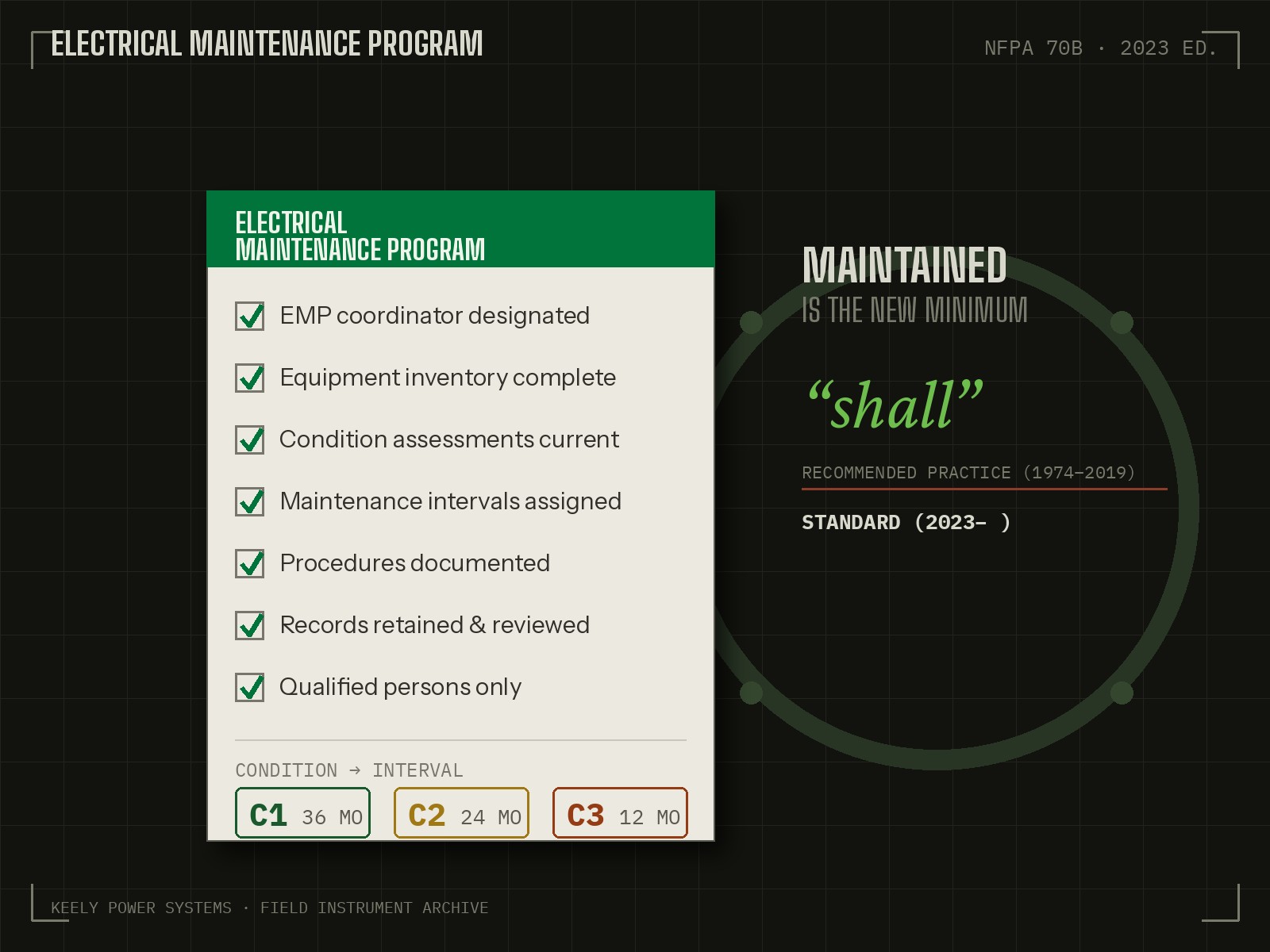
A designated coordinator responsible for the program, with maintenance performed only by qualified persons — trained, knowledgeable, and equipped for the specific equipment.
A survey of your electrical distribution equipment, with each asset identified and assessed. You can't maintain — or defend — what you haven't documented.
Maintenance and testing intervals set from each asset's physical condition and criticality, per the standard's tables — not one arbitrary calendar for everything.
Written procedures, recorded results, retained records, and a feedback loop: test results adjust future intervals, and failures trigger program review.
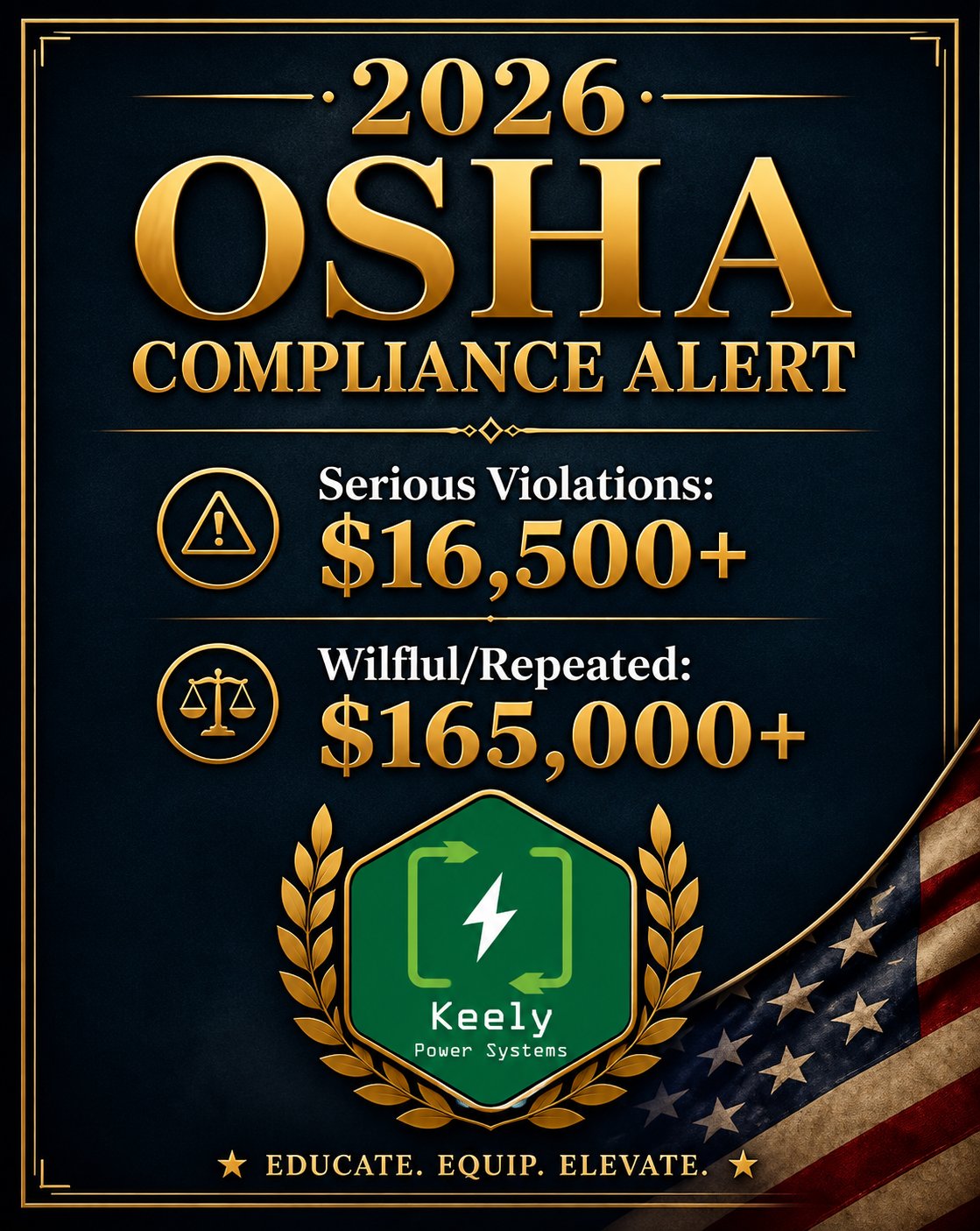
OSHA doesn't cite "NFPA 70B" by name — it cites its own electrical regulations and the General Duty Clause. But when an inspector or an incident investigation asks whether your equipment was properly maintained, NFPA 70B is the standard that defines what "properly maintained" means. Here's the federal penalty schedule those citations carry (2026 amounts, adjusted annually — Idaho is under federal OSHA):
The quiet math: a documented maintenance program typically costs a fraction of a single repeated citation — before counting the outage, the fire, or the injury behind it.
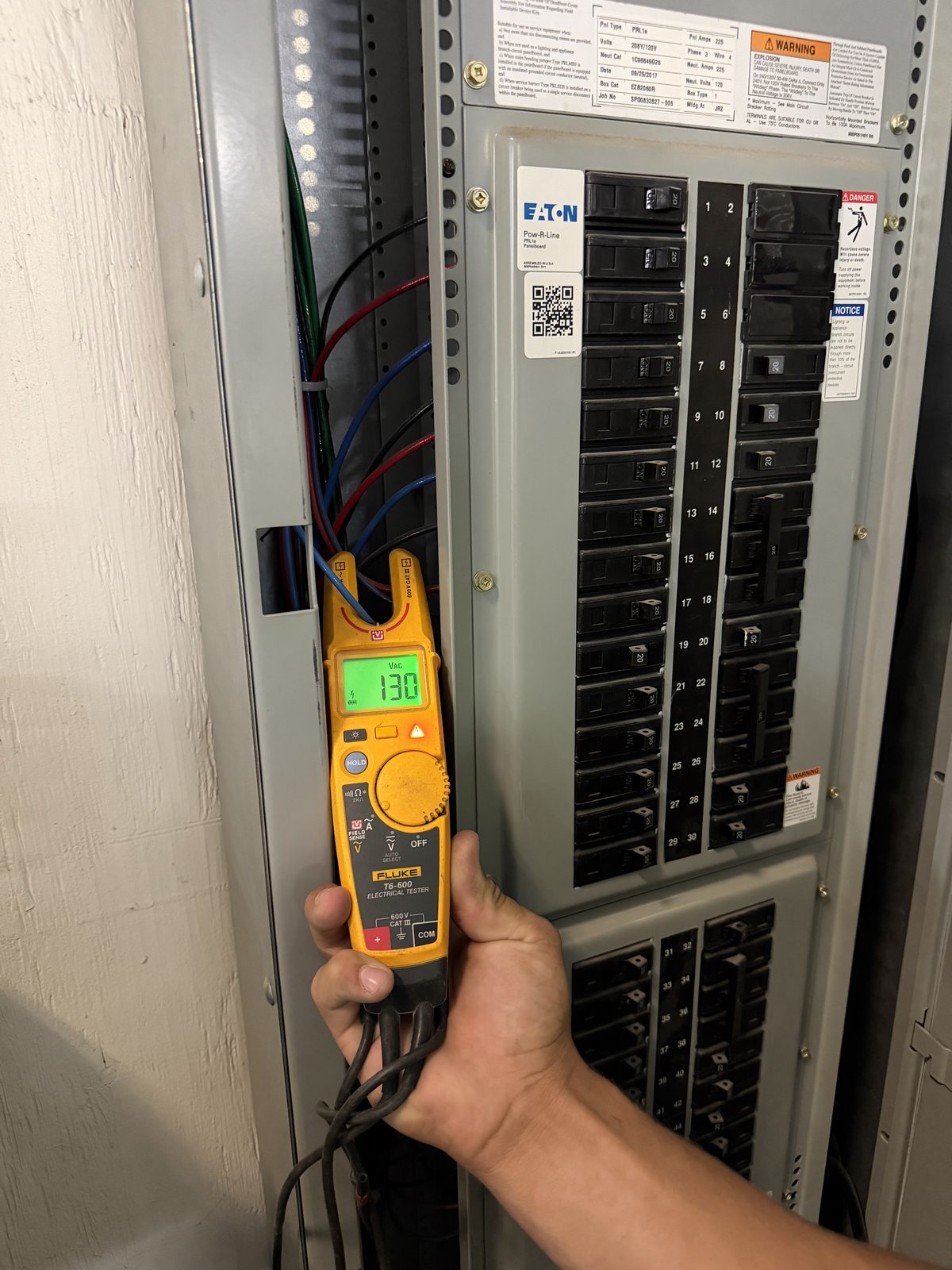
If the EMP requirements read like a description of the TEGG preventive maintenance program, that's not a coincidence — TEGG's process was built around exactly this maintenance philosophy years before the 2023 edition made it a standard. The survey builds your required inventory. Energized and de-energized testing produce your condition assessments. Intervals are set from condition and criticality. And every cycle generates the documentation the standard — and your insurer — expects to see.
That means compliance doesn't have to be a separate project bolted onto your operations. It falls out of a maintenance program that was already worth running for reliability alone.
NFPA 70B became a standard — with enforceable 'shall' language — in its 2023 edition, replacing decades as a recommended practice. Whether it's legally binding on your facility depends on adoption by your jurisdiction, your insurer's requirements, and contractual obligations. Practically, OSHA's General Duty Clause, insurance carriers, and liability exposure are already pushing facilities toward compliance, because 70B now defines what 'properly maintained' means.
The documented program NFPA 70B requires every facility to have. At minimum it identifies who runs the program, inventories your electrical equipment with condition assessments, sets maintenance intervals based on condition and criticality, documents procedures and results, and feeds those results back into the plan. A binder of old invoices doesn't qualify — it has to be a living, documented program.
Instead of maintaining everything on the same calendar, NFPA 70B assigns each piece of equipment a condition rating (based on inspection and testing) and a criticality rating (based on what happens if it fails), and sets the maintenance interval from those. Well-maintained, low-risk gear earns longer intervals; degraded or critical equipment gets attention sooner.
With a survey. The first step of both NFPA 70B compliance and the TEGG program is the same: inventory your electrical equipment and assess its condition. From there, intervals, procedures, and documentation follow a defined path. A facility can go from nothing to a functioning, documented EMP in one program cycle.
Tightly. NFPA 70E's arc flash protections assume protective devices operate as designed — which is only true if they're maintained. 70E explicitly requires considering the 'condition of maintenance' of equipment. In short: 70B keeps the equipment trustworthy, 70E keeps the people safe working on it, and each depends on the other.
Usually, yes. Carriers increasingly ask about electrical maintenance practices at renewal, request infrared survey reports, and in some cases condition coverage or premiums on them. A documented 70B-aligned program answers those questions before they're asked.
Under the 2026 federal penalty schedule, a first-time 'serious' violation runs up to $16,550 per violation. Get cited again for the same or a substantially similar hazard and it becomes a 'repeated' violation at up to $165,514 each — the same maximum as a 'willful' violation, which OSHA can cite even on a first inspection if you knowingly left a documented hazard uncorrected. Failure to fix a cited condition adds up to $16,550 per day. Amounts adjust annually for inflation.
Start with a no-cost, no-obligation survey: we'll walk your electrical system, give you a written proposal for your testing program, and include the replacement cost of your electrical distribution — so you know exactly what's at stake.