Megger testing for cables, transformers, motors and switchgear — find failing insulation during a planned shutdown, not during an outage. Serving Boise, Meridian, Nampa, Caldwell, Eagle, Star and all of Idaho.
Insulation resistance (IR) testing — often called megger testing — applies a DC test voltage across the insulation of cables, transformers, motors, switchgear and busway and measures how much current leaks through. Healthy insulation holds that current back. Aging, moisture, contamination, heat and mechanical damage let it through, long before the equipment fails.
A single reading tells you something. A trend over several test cycles tells you much more, which is why we document every result against the equipment's baseline and prior tests, and flag the readings that are moving the wrong way.
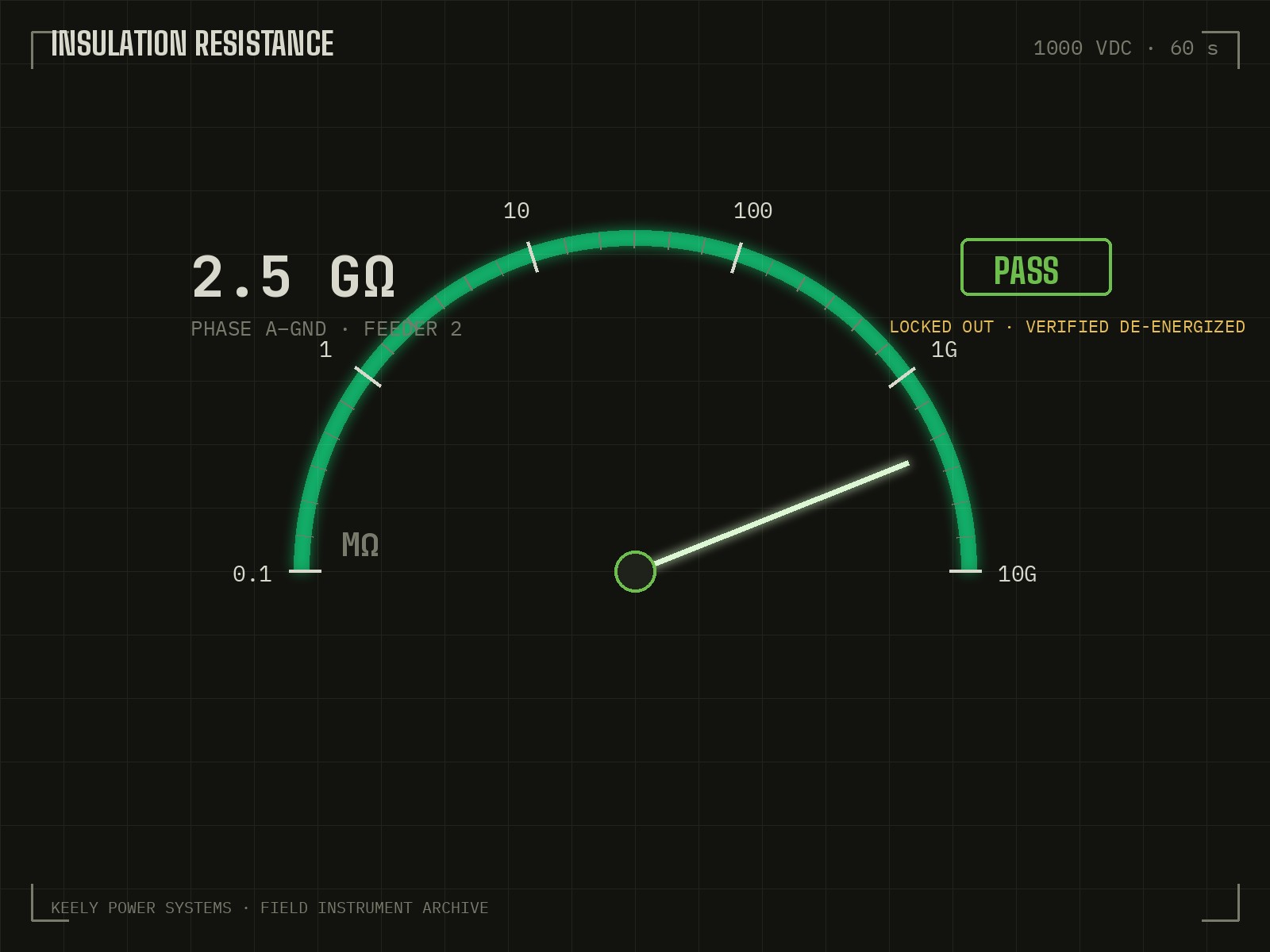
The equipment is de-energized, locked out, verified dead and isolated from its sources and loads. We then apply a test voltage matched to the equipment's rating — commonly 500, 1,000, 2,500 or 5,000 VDC — and record the resistance after a timed hold. Your report shows what passed, what is marginal, and what to clean, repair or replace before it fails in service.
Looking for thermal imaging instead? "IR" can also mean infrared — see our infrared thermography service for energized scanning.
IR testing applies a DC voltage to electrical insulation and measures the resistance to current leakage. Low or declining readings indicate moisture, contamination, aging or damage that can lead to a ground fault or failure. It is also commonly called megger testing.
Yes. Insulation resistance testing is a de-energized test. Work is scoped by section so testing can be done in planned windows such as nights, weekends or scheduled shutdowns.
Insulation resistance testing is a de-energized electrical test of the insulation itself. Infrared thermography is an energized, non-contact scan with a thermal camera that finds hot connections and overloaded components. They find different problems, and a complete maintenance program uses both.
It depends on the equipment's criticality, age, environment and condition. NFPA 70B bases maintenance intervals on those factors, and we help you set them as part of your Electrical Maintenance Program.
A written report with the readings for each piece of equipment, how they compare to prior tests, and clear recommendations for anything that needs attention.
Start with a no-cost, no-obligation survey: we'll walk your electrical system, give you a written proposal for your testing program, and include the replacement cost of your electrical distribution — so you know exactly what's at stake.